

- October 26, 2026
- Posted by: Qamar Un Nisa
- Category: Uncategorized
Medical education is evolving as digital technology creates new ways for students to understand the human body. Traditional anatomy teaching methods remain important, but modern medical institutions are increasingly exploring interactive tools that make complex anatomical structures easier to visualize and study.
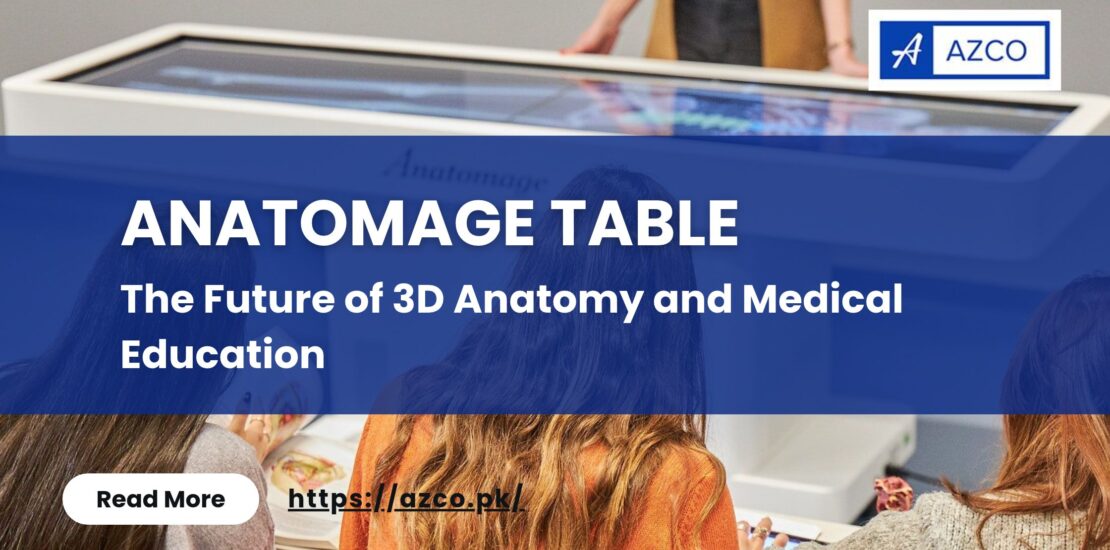
The Anatomage Table is an advanced virtual dissection platform designed to support anatomy and physiology education through interactive, life-size 3D visualization. It enables students and educators to explore anatomical structures, examine body systems, and investigate the relationships between different organs in a digital learning environment.
For medical universities, dental colleges, nursing institutions, and teaching hospitals, this technology offers an innovative way to complement conventional anatomy laboratories and create more engaging learning experiences.
What Is the Anatomage Table?
The Anatomage Table is a digital anatomy visualization and virtual dissection system that allows users to explore detailed, interactive representations of the human body on a large touchscreen display. Depending on the available software and content, users can examine different anatomical systems, navigate through body layers, and study structures from multiple angles.
Unlike printed diagrams or static anatomical models, the platform allows students to interact directly with digital anatomical content. They can explore the skeletal, muscular, nervous, cardiovascular, and other body systems while developing a better understanding of their structure and relationships.
The platform is designed to support classroom demonstrations, practical sessions, collaborative learning, and independent study. It can help educators explain complicated anatomical concepts through visual demonstrations rather than relying exclusively on textbooks and two-dimensional illustrations.
How the Anatomage Table Is Transforming Medical Education
1. Interactive 3D Anatomy Learning
Students need to understand the location, structure, and relationships of organs, tissues, bones, muscles, and other anatomical components.
The Anatomage Table supports interactive learning by allowing students to rotate, zoom, isolate, and explore digital anatomical structures. This visual approach can make spatial relationships easier to understand and help students connect theoretical concepts with practical observations.
For educators, interactive demonstrations also provide opportunities to explain complex topics in a more engaging and accessible way.
2. Advanced Virtual Dissection
Dissection is an important part of anatomy education, helping students understand the organization of the human body. However, traditional dissection requires suitable laboratory facilities, specimens, preparation, and ongoing institutional resources.
The Anatomage Table offers a digital alternative for virtual dissection activities. Students can explore anatomical layers, examine internal structures, and investigate different regions of the body without physically dissecting a specimen during that activity.
Virtual dissection can complement conventional laboratory teaching and provide additional opportunities to revisit anatomical structures. It does not need to replace traditional dissection; instead, institutions can integrate both approaches according to their curriculum, facilities, and learning objectives.
3. Better Understanding of Anatomy and Physiology
Anatomy explains the structure of the human body, while physiology explores how its systems function. Teaching both subjects together helps students understand the relationship between structure and function.
With the Anatomage Table, instructors can use three-dimensional visualizations to explain where structures are located and how different components relate to one another. This can support discussions about organ systems, anatomical regions, and clinically relevant structures.
When combined with lectures, practical exercises, and assessments, interactive visualization can help students develop a more connected understanding of anatomy and physiology.
4. More Engaging Classroom Experiences
Student engagement is an important part of effective medical education. Long lectures and static diagrams may not always provide enough opportunities for active exploration.
Interactive anatomy technology allows instructors to involve students in demonstrations, group activities, and guided exploration. Students can observe anatomical structures together, ask questions, and discuss their findings during practical sessions.
This approach can encourage collaboration and make anatomy classes more participatory. Educators can also use the platform to revisit challenging topics and support students who benefit from additional visual explanations.
5. Support for Multiple Medical Disciplines
The value of 3D anatomy technology extends beyond medical colleges. A digital anatomy platform can support teaching and learning across several healthcare disciplines, depending on its available content and institutional use cases.
Potential applications include:
- Medical universities: Teaching human anatomy, anatomical relationships, and body systems.
- Dental colleges: Supporting the study of head and neck anatomy and related structures.
- Nursing institutions: Strengthening foundational knowledge of human anatomy and organ systems.
- Allied health programs: Supporting anatomy education in relevant clinical and diagnostic disciplines.
- Teaching hospitals: Providing visual educational resources for suitable teaching and training activities.
By supporting different teaching scenarios, the platform can become a useful resource for institutions seeking to modernize their anatomy education facilities.
Key Benefits of the Anatomage Table for Medical Institutions
Adopting advanced anatomy technology can offer several educational advantages when the platform is appropriately integrated into teaching programs.
Improved visualization: Three-dimensional models help students explore anatomical structures from different perspectives.
Interactive learning: Students can actively investigate structures rather than relying only on static illustrations.
Repeatable practice: Digital content can be revisited for revision, demonstrations, and classroom activities.
Collaborative teaching: Instructors can guide group discussions and demonstrate anatomical concepts on a shared display.
Flexible educational support: The platform can supplement lectures, practical sessions, and independent study.
Modern learning environments: Digital anatomy technology can contribute to the development of contemporary medical education laboratories.
The actual benefits depend on curriculum design, faculty training, software capabilities, and how consistently the technology is used.
Anatomage Table vs. Traditional Anatomy Teaching
Traditional anatomy teaching may involve textbooks, anatomical charts, physical models, cadaveric dissection, and laboratory demonstrations. Each method offers different educational benefits.
Textbooks provide detailed explanations and structured reference material. Physical models offer tangible representations of anatomical structures. Cadaveric dissection can provide direct experience with human anatomical specimens. Digital anatomy platforms add interactive three-dimensional visualization and repeatable virtual exploration.
Rather than treating these approaches as competitors, medical institutions can combine them to support different learning objectives.
For example, an instructor may introduce a body system through a lecture, demonstrate its structures using the Anatomage Table, and reinforce the lesson through laboratory activities and assessments. This blended approach allows students to learn through multiple formats.
What Should Institutions Consider Before Investing?
Selecting an anatomy visualization system requires careful evaluation. Medical institutions should consider their teaching requirements, available facilities, and long-term educational goals.
Important factors include:
- Curriculum alignment: Confirm that the platform supports the subjects and educational activities required by the institution.
- Software and content: Review the available anatomical datasets, visualization tools, and supported learning features.
- Display and usability: Evaluate screen size, interface usability, and suitability for group teaching.
- Faculty training: Ensure educators can confidently integrate the technology into lectures and practical sessions.
- Installation and support: Confirm space requirements, technical specifications, maintenance arrangements, and after-sales support.
- Budget and long-term value: Assess the total cost of ownership, licensing requirements, and expected educational use.
A practical demonstration can help faculty members evaluate the platform before making a purchasing decision.
The Future of 3D Anatomy in Medical Education
Digital learning technologies are creating new opportunities for medical institutions to improve the way complex subjects are taught. Interactive 3D visualization, virtual dissection, and digital anatomical resources can help educators present difficult concepts in more accessible ways.
As medical education continues to evolve, institutions may increasingly combine digital anatomy platforms with traditional laboratory teaching, simulation-based learning, and other educational technologies.
The future of anatomy education is not simply about adopting new equipment. It is about using appropriate technology to strengthen understanding, encourage active learning, and support the development of knowledgeable healthcare professionals.
The Anatomage Table represents one approach to this transformation by bringing interactive anatomical exploration into the modern classroom.
Why Choose AZCO for Advanced Anatomy Education Solutions?
AZCO is a Pakistani supplier of medical, diagnostic, and scientific technology solutions, serving healthcare institutions and educational organizations. As an authorized distributor of Anatomage Table solutions, AZCO supports institutions interested in exploring advanced 3D anatomy and virtual dissection technology.
Medical universities, dental colleges, and teaching hospitals can contact AZCO to discuss their anatomy laboratory requirements, learn about available solutions, and explore how digital anatomy technology may fit their educational objectives.
Bring anatomy to life with advanced 3D learning technology.
Contact AZCO to learn more about the Anatomage Table and its applications in modern medical education.
Website: https://azco.pk/
Phone: (042) 35782418 / 35782420
Email: sales@azco.pk
Address: Office #526, 5th Floor, Eden Tower, Lahore, Pakistan
Conclusion
The Anatomage Table brings a modern, interactive dimension to anatomy and physiology education. By combining three-dimensional visualization with virtual dissection, it offers educators additional ways to explain complex structures, engage students, and reinforce classroom learning.
For medical and healthcare institutions looking to enhance their anatomy laboratories, this technology can be a valuable addition to a well-designed teaching program. With appropriate implementation and faculty support, interactive anatomy tools can help create a more engaging and visually rich learning environment.
Explore the future of 3D anatomy education with AZCO. Visit https://azco.pk/ to learn more.