

- November 3, 2026
- Posted by: Qamar Un Nisa
- Category: Uncategorized
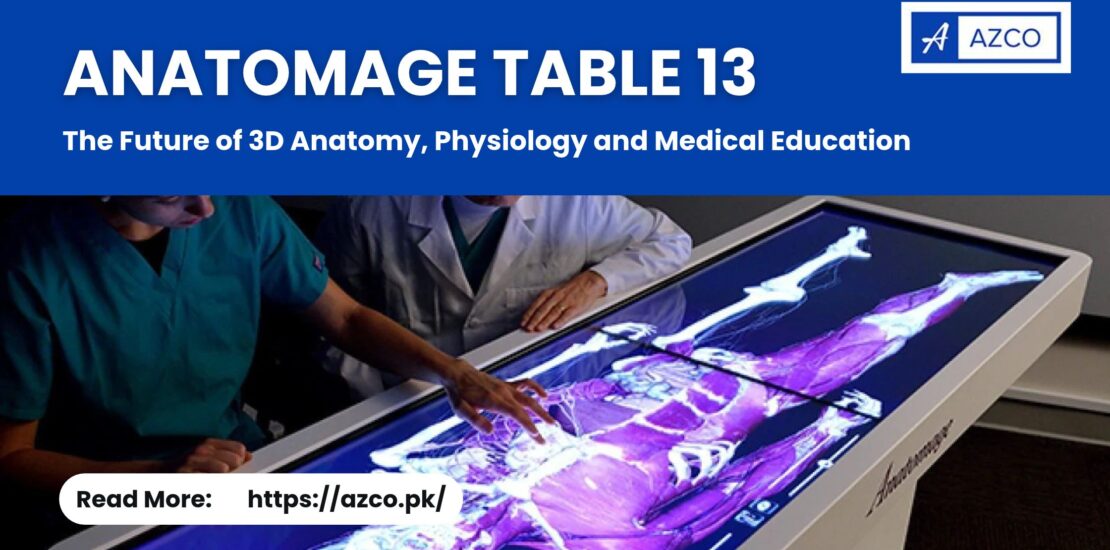
Medical education is entering a new era where technology is changing how students understand, explore, and experience the human body. Traditional textbooks, static diagrams, and physical anatomical models remain important learning resources, but modern medical institutions increasingly need interactive tools that make complex anatomical and physiological concepts easier to understand.
Introducing Anatomage Table 13, an advanced 3D medical education platform designed to take anatomy and physiology learning to the next level. Built on more than 15 years of continuous innovation, the latest upgrade introduces enhanced anatomical reference models, realistic physiological simulations, advanced imaging technologies, and new interactive learning activities.
With these innovations, Anatomage Table 13 offers medical universities, teaching hospitals, and healthcare educators a more engaging way to explore the complexity of the human body while connecting anatomical structures with real physiological functions and clinical applications.
What Makes Anatomage Table 13 Different?
The Anatomage Table is a real-human-based 3D anatomy and physiology learning platform that transforms medical education through interactive digital cadavers and advanced visualization technology.
Unlike conventional anatomical charts and static learning materials, it allows students to explore human anatomy in a detailed, interactive 3D environment. Users can rotate digital bodies, examine individual organs, isolate anatomical structures, and perform virtual dissections to understand the relationships between different body systems.
The latest Table 13 upgrade builds on these capabilities with expanded anatomical diversity, additional reference bodies, more detailed physiological simulations, and enhanced educational tools.
These improvements help students develop a deeper understanding of both the structure and function of the human body.
1. Explore Greater Anatomical Diversity with New Reference Bodies
One of the major highlights of Anatomage Table 13 is its expanded collection of anatomical reference models.
The latest update introduces Class I and Class III obesity reference bodies, allowing students to examine how obesity affects internal anatomical structures and organ relationships. These models are developed using real cadaver data, scientific research, and medical imaging.
Students can explore changes in fat distribution, organ positioning, and other anatomical characteristics while comparing different body types.
Another important addition is a standardized male reference body that provides an additional resource for studying normal human anatomy.
The expanded multi-body comparison capabilities also allow students to examine anatomical variations across different digital bodies, helping them understand that human anatomy naturally differs from one individual to another.
2. Experience Real-Time Physiology Through Interactive Simulations
Understanding anatomy is only one part of medical education. Students must also understand how different organs and body systems function together.
Anatomage Table 13 takes physiological learning further with new dynamic simulations that demonstrate complex biological processes using realistic human anatomy.
Some of the highlighted additions include:
- Swallowing: Explore the coordinated movement of more than 50 anatomical structures involved in the swallowing process.
- Sleep Physiology: Understand brain activity across different sleep stages, including REM sleep.
- Sleep Apnea: Visualize airway obstruction, muscular movements, and neural stimulation during obstructive sleep apnea.
- Alveolar Gas Exchange: Follow oxygen and carbon dioxide movement between the lungs and bloodstream.
- Hepatic Physiology: Explore liver functions, metabolism, and enterohepatic circulation.
- Neuromuscular Junction: Understand how nerve signals activate skeletal muscle.
- Placental Exchange: Study the transfer of oxygen, nutrients, and waste between maternal and fetal circulation.
These interactive visualizations help students connect theoretical knowledge with physiological processes that occur inside the human body.
3. Advanced Imaging with HiP-CT Technology
Medical imaging plays an important role in understanding internal anatomical structures. Anatomage Table 13 introduces HiP-CT imaging datasets that allow users to explore whole organs at micron-scale resolution.
This advanced imaging approach provides opportunities to examine anatomical details at different levels, connecting larger organ structures with microscopic features.
By integrating these datasets into an interactive 3D visualization environment, students and educators can explore the complexity of human organs in greater detail.
It also helps demonstrate how advanced imaging technologies are contributing to modern medical research and education.
4. Improved Learning Tools for Interactive Medical Education
Another important improvement in Anatomage Table 13 is its expanded collection of educational activities and learning tools.
These features help instructors create more engaging learning experiences while encouraging students to actively participate in anatomy lessons.
Key educational updates include:
Anatomy Construction Activities: Students can build anatomical pathways and improve their understanding of anatomical structures, organization, and spatial relationships.
DICOM Activities: Learners can identify anatomical structures using 3D reconstructions based on real CT imaging, helping them connect anatomy education with clinical imaging.
Expanded Histology Library: Additional digital histology slides provide opportunities to study microscopic tissue structures and develop a deeper understanding of human biology.
Enhanced Ultrasound Simulation: Students can compare 3D anatomy, 2D imaging slices, and simulated ultrasound images within an interactive learning environment.
Slab Dissection Tool: Improved cross-sectional exploration allows users to examine anatomical structures at different depths through automatically generated parallel clipping planes.
These tools support active learning, knowledge assessment, and better visualization of complex medical concepts.
5. Transforming Medical Education Beyond Traditional Dissection
Virtual dissection is becoming an increasingly valuable addition to modern medical education.
With Anatomage Table 13, students can interact with digital human bodies and explore anatomical structures without relying exclusively on physical dissection materials.
The platform allows users to isolate organs, examine body systems, perform virtual dissections, and investigate anatomical relationships from multiple perspectives.
For medical universities and teaching hospitals, this creates opportunities to supplement traditional anatomy laboratories with advanced digital learning experiences.
Educators can use the platform during classroom demonstrations, group discussions, practical lessons, and independent student learning.
Rather than replacing every traditional teaching method, the Anatomage Table provides an additional resource that makes anatomy and physiology education more interactive and accessible.
6. Why Medical Universities and Teaching Hospitals Should Consider Anatomage Table 13
Modern healthcare education requires students to understand complex anatomical structures, physiological functions, and clinical applications.
Anatomage Table 13 provides an integrated digital learning environment that supports these educational objectives.
Its major benefits include:
- Enhanced understanding of complex 3D anatomical structures.
- Interactive virtual dissection and digital cadaver exploration.
- Improved visualization of physiological processes.
- Greater exposure to anatomical variations.
- Integration of clinical imaging and digital histology.
- More engaging classroom demonstrations.
- Interactive learning activities for students and educators.
- Opportunities to connect theoretical knowledge with clinical applications.
By incorporating advanced visualization technology into anatomy laboratories, educational institutions can strengthen their teaching resources and support innovative medical learning environments.
Conclusion: A New Direction for 3D Medical Education
The future of medical education depends on combining scientific knowledge with innovative learning technologies. As medical science continues to advance, educational institutions need effective ways to help students understand the human body beyond traditional diagrams and textbooks.
Anatomage Table 13 represents an important advancement in this direction. Its latest upgrades bring together anatomical diversity, real-time physiology simulations, advanced imaging, and interactive educational tools within one powerful learning platform.
From exploring obesity-related anatomical changes to understanding complex physiological processes such as swallowing, sleep, and gas exchange, the platform creates new opportunities for deeper medical learning.
For medical universities, anatomy departments, and teaching hospitals, Anatomage Table 13 offers an opportunity to embrace the next generation of 3D medical education.
Explore anatomy beyond the ordinary. Experience the future of medical learning with Anatomage Table 13.