

- October 15, 2026
- Posted by: Qamar Un Nisa
- Category: Uncategorized
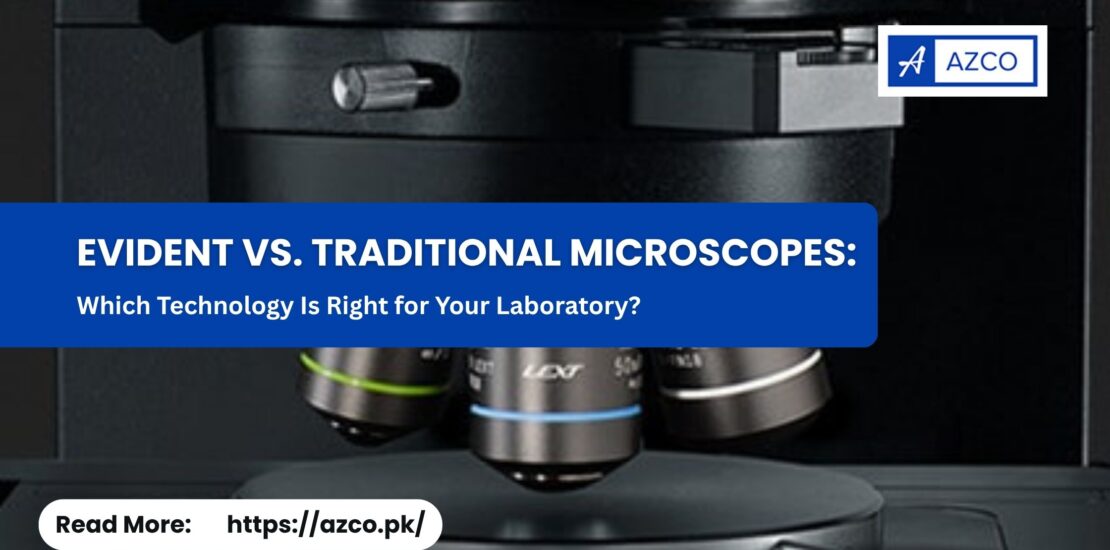
Modern laboratories rely on accurate imaging, clear visualization, and dependable results to support research, diagnostics, education, and industrial inspection. Choosing the right microscope is therefore an important decision for laboratory professionals. While traditional optical microscopes remain widely used, advanced digital microscopy solutions are changing how laboratories capture, analyze, and share images.
An Evident microscope offers modern imaging solutions designed for various scientific and industrial applications, while traditional microscopes provide a familiar, practical approach to observing specimens through optical lenses. Understanding their differences can help laboratories select the technology that best suits their requirements, workflow, and budget.
What Is an Evident Microscope?
Evident is a scientific technology company formerly known as Olympus Scientific Solutions. The company provides microscopy and imaging solutions for life sciences, clinical research, materials science, manufacturing, and industrial inspection.
An Evident microscope can refer to different types of microscopy systems, including conventional optical microscopes, digital microscopes, and advanced imaging solutions. Depending on the model, these systems can offer high-quality optics, digital image capture, measurement capabilities, and software-assisted analysis.
Some Evident solutions support applications such as biological specimen observation, material inspection, quality control, and detailed surface analysis. Digital models can also help users document findings and share images with colleagues, making them useful in collaborative laboratory environments.
The right model depends on the application, required magnification, imaging needs, and working environment.
What Is a Traditional Microscope?
A traditional microscope, commonly known as an optical microscope, uses lenses and visible light to magnify small objects that cannot be clearly observed with the naked eye.
These microscopes are widely used in educational institutions, medical laboratories, research facilities, and industrial environments. Users typically observe specimens through an eyepiece and adjust the focus, illumination, and magnification to obtain a clear image.
Traditional microscopes remain valuable because of their straightforward operation, established laboratory workflows, and availability in different configurations. They can be suitable for routine specimen examination, classroom learning, and laboratory tasks that do not require advanced digital imaging.
However, documenting observations or sharing images may require additional equipment, such as a camera attachment or external imaging system.
Evident Microscope vs. Traditional Microscope: Key Differences
Although both technologies support detailed specimen observation, their capabilities can differ depending on the model.
1. Image Quality and Visualization
Image quality is one of the most important factors when selecting a microscope. Both traditional optical microscopes and Evident systems can provide clear, detailed images when properly configured.
An Evident microscope may offer advanced optical performance and, in digital configurations, convenient on-screen visualization. Depending on the model, users can view specimens on a monitor rather than relying exclusively on an eyepiece.
Traditional microscopes provide direct optical viewing and can deliver excellent image quality for routine laboratory applications. Their performance depends on lens quality, illumination, magnification, specimen preparation, and optical configuration.
Which is better? The best choice depends on the required image detail and application. Laboratories should compare the specifications of individual models rather than assuming that every digital microscope outperforms every traditional microscope.
2. Digital Imaging and Documentation
Digital documentation is increasingly important in modern laboratory workflows. Researchers and laboratory technicians often need to save images, maintain records, prepare reports, and present findings.
A digital Evident microscope can support image capture and documentation through compatible cameras, software, or integrated imaging features, depending on the system.
Traditional microscopes without cameras generally require additional equipment to capture images. Once a suitable camera is installed, they can also support digital documentation.
For laboratories that regularly produce reports, maintain digital records, or share specimen images, a digital imaging solution may improve convenience and workflow efficiency.
3. Measurement and Image Analysis
Accurate measurement is essential in materials testing, industrial inspection, research, and quality control.
Selected Evident digital microscopy systems can work with compatible imaging software to support measurements, image annotation, and other analysis functions. Depending on the software and configuration, users may be able to measure dimensions, compare features, and document inspection results.
Traditional microscopes can also support measurements through calibrated eyepiece scales, stage micrometers, or compatible digital accessories. However, some measurement workflows may require additional manual steps.
For laboratories that perform frequent measurements or need consistent digital reporting, software-assisted imaging can be a useful advantage.
4. Ease of Use and Workflow Efficiency
Traditional microscopes are familiar to many laboratory professionals. Their basic operation is straightforward, making them suitable for routine observations and educational environments.
An Evident microscope with digital imaging features may offer additional convenience through monitor-based viewing, image storage, and compatible analysis tools. These features can help teams review specimens together and reduce the need to repeatedly capture the same observations.
However, digital systems may require software training, computer compatibility checks, and appropriate technical support.
Before purchasing, laboratories should consider the experience of their staff, the complexity of daily tasks, and the time required to integrate the equipment into existing workflows.
5. Cost and Long-Term Value
Budget is another major consideration when selecting laboratory equipment.
Traditional microscopes are available in a wide range of configurations and may be an economical option for laboratories that primarily require routine optical observation. Their overall cost depends on optical quality, accessories, maintenance, and intended application.
An Evident microscope with advanced digital features may require a higher initial investment, depending on the model and configuration. However, digital documentation, measurement capabilities, and collaborative viewing may provide practical value for laboratories that regularly use these functions.
When comparing prices, consider the total cost of ownership, including accessories, software, training, maintenance, and future upgrades.
The most suitable microscope is not necessarily the least expensive or the most advanced. It is the one that delivers the capabilities your laboratory actually needs.
Which Microscope Is Best for Different Laboratory Applications?
Different laboratories have different priorities. The following examples can help guide your decision.
Medical and educational laboratories: Traditional optical microscopes can be suitable for routine specimen observation and student training. Digital imaging systems may be preferable when instructors need to display specimens on screens or save images for teaching materials.
Research laboratories: Researchers may benefit from an Evident microscope configuration that supports their imaging requirements, documentation needs, and compatible analytical tools. The appropriate system depends on the specimens and research methods involved.
Industrial inspection and quality control: Digital microscopy solutions can be useful for inspecting components, documenting surface defects, and measuring features. The required magnification, depth of field, lighting, and measurement accuracy should guide model selection.
Materials science laboratories: Both traditional and advanced microscopy systems can support material examination. Laboratories should assess whether their work requires routine optical observation, digital measurement, specialized illumination, or more advanced imaging techniques.
Manufacturing environments: Digital microscopy can help teams document inspection results and communicate findings across departments. Traditional microscopes may remain appropriate for simpler inspection tasks.
How to Choose the Right Microscope for Your Laboratory
Before investing in an Evident microscope or a traditional optical system, evaluate the following factors:
- Application requirements: Identify whether the microscope will be used for biological specimens, research, education, industrial inspection, or materials analysis.
- Magnification and resolution: Determine the level of detail required for your specimens and inspection tasks.
- Imaging requirements: Decide whether direct optical viewing is sufficient or whether digital capture and monitor-based viewing are necessary.
- Measurement and software: Check whether your work requires calibrated measurements, image analysis, annotations, or digital reporting.
- Budget and maintenance: Compare the initial price with ongoing costs, accessories, training, and support.
- Future needs: Consider whether your laboratory may need additional imaging or documentation capabilities as its workload grows.
Review the technical specifications of individual models and consult a qualified supplier to identify a solution that meets your laboratory’s operational requirements.
Conclusion
Both Evident microscopes and traditional optical microscopes play important roles in modern laboratories. Traditional systems remain practical for routine observation, educational activities, and applications where straightforward optical viewing is sufficient.
An Evident microscope with suitable digital imaging capabilities may be a better fit for laboratories that need convenient image documentation, software-assisted measurements, collaborative viewing, or more efficient inspection workflows.
Ultimately, the right choice depends on your laboratory’s application, technical requirements, available budget, and future goals. Evaluating these factors carefully will help you invest in microscopy technology that supports accuracy, productivity, and reliable results.
If you are looking for microscopy solutions for your laboratory, AZCO can help you explore suitable equipment options based on your application and requirements.
Contact AZCO for more information:
- Phone: (042) 35782418 / 35782420
- Address: Office #526, 5th Floor, Eden Tower, Lahore
- Website: https://azco.pk/
- Email: sales@azco.pk
Explore microscopy solutions designed to support modern laboratory, research, and industrial applications.